
Why Do Motorsport Suspension Systems Use Spherical Bearings and Rod Ends?
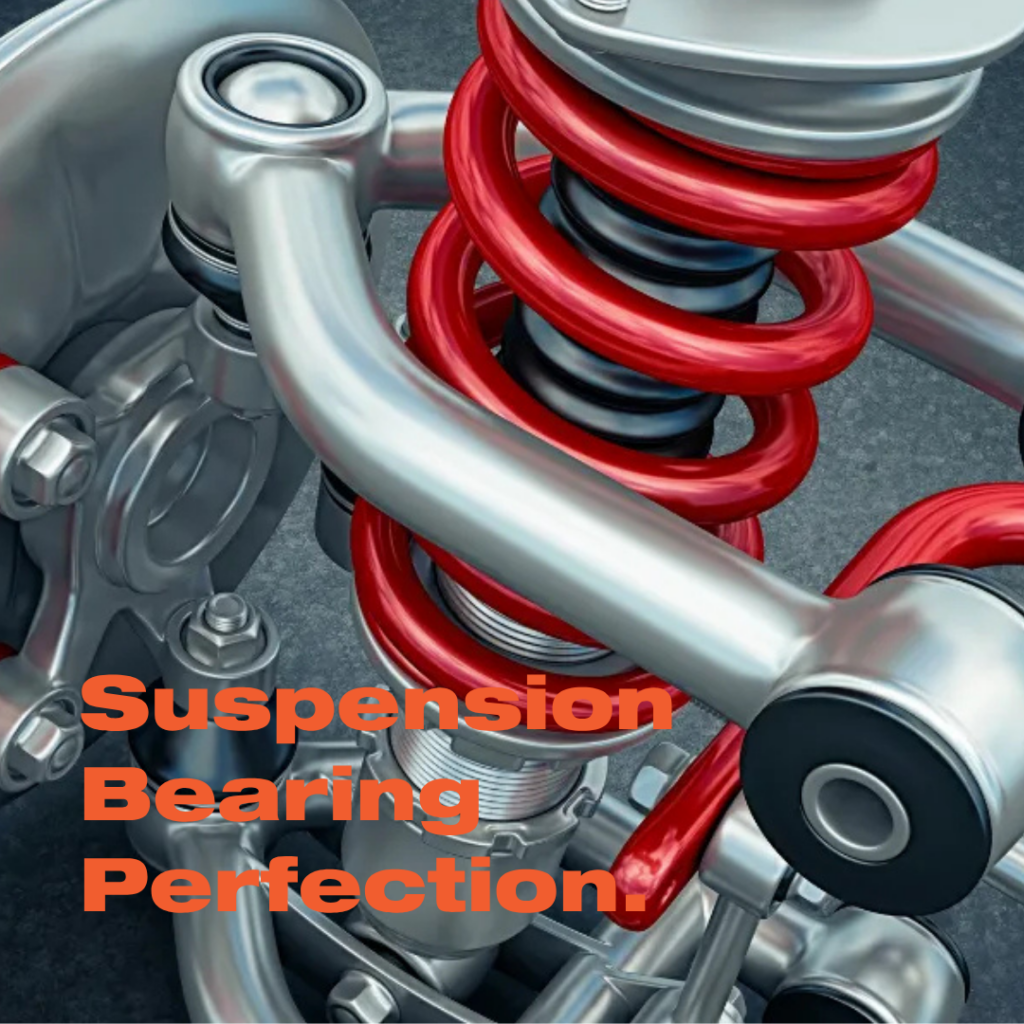
Movement without reducing reliability of performance
Motorsport Suspension Systems must move freely. However, it must not move in ways the engineers did not intend.
That distinction explains why spherical bearings and rod ends are widely used throughout motorsport suspension systems.
Unlike a conventional rubber bush, a spherical bearing allows controlled movement without introducing significant flexibility. A rod end combines this movement with a threaded housing. This makes it easier to connect and adjust suspension links.
The result is more precise suspension geometry, clearer driver feedback and a compact connection between moving components.
Of course, there is a catch. There is always a catch.
Spherical bearings and rod ends must be selected, installed and inspected correctly. Using the wrong size or allowing the joint to bind can quickly turn a precision component into a very expensive weak point.
In 30 Seconds
Spherical bearings allow a suspension joint to rotate and articulate while supporting high loads.
Rod ends use a spherical bearing inside a threaded housing. They can be fitted to adjustable links, steering arms, pushrods and other motorsport components.
They are used because they provide:
- Precise suspension movement
- Low compliance
- Controlled articulation
- Compact packaging
- Adjustable link lengths
- Predictable handling
- High load capacity for their size
However, engineers must consider load direction, misalignment, liner type, thread size, installation and expected service life.
What Is the Difference Between a Spherical Bearing and a Rod End?
The terms are often used together, but they do not describe exactly the same component.
| Component | What is it? | How is it normally installed? |
|---|---|---|
|
Spherical plain bearing |
A spherical inner ring fitted within an outer race |
Pressed or retained inside a machined housing |
|
Rod End |
A spherical bearing fitted inside a housing with a threaded shank |
Screwed into or onto an adjustable suspension link |
|
Rubber bush |
A flexible rubber or elastomer element between two components |
Pressed into a suspension arm or mounting point |
A spherical bearing is usually built directly into the surrounding component.
A rod end provides its own housing and threaded connection. Rod ends are available with male or female threads. Both left-hand and right-hand threads may be used to make link adjustment easier.
Pairing opposite thread directions allows the length of a link to be changed by rotating its centre section. The rod ends do not need to be disconnected first.
This is useful when adjusting suspension geometry at the circuit.
Why Not Use Rubber Suspension Bushes?
Rubber bushes are used extensively in road cars for very good reasons.
They help isolate vibration, absorb noise and soften impacts. They also require relatively little attention during normal road use.
That makes the car quieter and more comfortable. Both are useful qualities when your passenger is carrying coffee rather than wearing a crash helmet.
However, rubber is designed to flex. That flexibility can allow a suspension component to move slightly under load.
During hard braking or cornering, this movement may alter:
- Camber
- Toe
- Caster
- Wheel position
- Steering response
- Suspension feedback
A carefully calculated suspension setting can therefore change once the car is subjected to real track loads.
Spherical bearings and rod ends reduce this unwanted compliance. They help the suspension follow the geometry intended by the engineer.
That does not automatically make them better for every vehicle. It makes them better suited to applications where precision takes priority over comfort and noise isolation.
How Do Spherical Bearings Allow Suspension Movement?
A spherical plain bearing has an inner ring with a curved outside surface. This sits inside a matching outer race.
The shape allows the inner ring to rotate and tilt within the outer race.
As a result, the joint can accommodate angular movement between connected components. This is important because a suspension link rarely moves through a perfectly flat path.
As the wheel rises and falls, the angle of the link may change. Steering movement can introduce another change of angle.
A conventional rigid joint could bind as these angles change. A spherical bearing allows the connection to articulate while continuing to support the load.
However, every bearing has a maximum permitted misalignment angle. That limit depends on the bearing design and the surrounding installation.
Why Is Misalignment Angle So Important?
The bearing must be able to move through the suspension’s complete operating range.
This includes:
- Full bump
- Full droop
- Steering movement
- Roll
- Braking
- Component deflection
- Setup changes
If the required angle exceeds the capability of the joint, the bearing may bind.
Once that happens, the load can be transferred into the housing, bolt or rod-end shank. This may cause rapid wear or structural damage.
High-misalignment spacers are often used to increase the available articulation. They also help position the bearing correctly on the mounting bolt.
However, spacers reduce the effective bolt diameter passing through the bearing. The complete assembly must therefore be assessed, not just the bearing itself.
Clearance should be checked throughout the full suspension travel. Looking at the joint while the car sits in the garage is not enough.
Where Are Rod Ends Used in Motorsport?
Rod ends can be used in several adjustable or articulated motorsport systems.
Common applications include:
- Steering links
- Track rods
- Pushrods and pullrods
- Anti-roll bar links
- Suspension control arms
- Damper connections
- Gear-selection linkages
- Throttle linkages
- Adjustable chassis braces
The exact applications depend on the car and suspension design.
A rod end is particularly useful where the length of a link must be adjustable. The spherical bearing inside the housing then allows the connection to articulate as the suspension moves.
Where Are Spherical Plain Bearings Used?
Spherical plain bearings may be fitted directly into wishbones, suspension uprights, rockers or other machined components.
This can create a more compact assembly than using a complete rod end.
Directly housed spherical bearings can also give engineers greater control over:
- Bearing position
- Housing stiffness
- Retention method
- Component width
- Suspension packaging
However, the housing fit and retention method must be correct.
Excessive interference or staking pressure can alter the bearing’s clearance and operating torque. MinebeaMitsumi’s assembly guidance warns that excessive fitting pressure can reduce bearing performance and shorten its life.
Hammering the bearing into place is not a precision installation method. It is simply an efficient way to damage an expensive component.
What Is the Difference Between PTFE-Lined and Metal-to-Metal Bearings?
Spherical bearings and rod ends are available with different sliding surfaces.
Two common choices are PTFE-lined and metal-to-metal designs.
PTFE-Lined Bearings
PTFE-lined bearings use a self-lubricating liner between the inner ring and outer race.
According to MinebeaMitsumi’s technical guidance, the PTFE liner provides the lubricating surface. Therefore, routine grease charging is not required.
Potential benefits include:
- Low friction
- Smooth articulation
- No routine grease application
- Reduced risk of grease attracting dirt
- Predictable movement
- Good wear resistance in suitable applications
However, the liner itself becomes part of the bearing’s service-life calculation.
Temperature, load, movement speed and oscillation angle can all affect liner wear. A PTFE-lined bearing must still be matched to the application.
Metal-to-Metal Bearings
Metal-to-metal spherical bearings use sliding metal surfaces and normally require suitable lubrication.
They may be considered where the loading, movement or operating environment makes a lined bearing unsuitable. However, lubrication access and maintenance must be included in the design.
The right choice depends on:
- Load
- Speed of movement
- Oscillation angle
- Temperature
- Contamination
- Maintenance access
- Required service life
Neither construction is automatically superior. Each solves a different engineering problem.
Why Are NMB E-Liner Bearings Used in Demanding Applications?
NMB E-Liner rod ends and spherical bearings use a specialised PTFE liner system.
The NMB E-Liner range supplied by ABC uses a double PTFE-impregnated liner with a Nomex woven backing. It is designed to improve wear resistance and performance under load.
The range includes:
These products are intended for demanding motorsport, aerospace and industrial applications where low friction, precise articulation and durability matter.
However, even a high-specification liner cannot rescue a badly designed mounting.
The bearing still needs the correct load capacity, fit, alignment and surrounding hardware.
Is a Larger Bore Always a Stronger Rod End?
No.
Bore size is only one dimension. It does not tell you everything about the strength or suitability of a rod end.
Engineers should also consider:
- Radial static load rating
- Axial load capacity
- Oscillating load
- Housing material
- Shank diameter
- Thread size
- Thread engagement
- Bearing width
- Misalignment angle
- Liner type
- Temperature range
- Direction of loading
A rod end is normally intended to carry load along the centre line of its shank.
If the assembly places a bending load across the shank, its effective strength can fall significantly. This often happens when spacers, brackets or mounting points place the joint too far away from its support.
A substantial-looking rod end can still be poorly installed.
Can the Smallest Suitable Rod End Save Weight?
Possibly, but “suitable” is doing a great deal of work in that sentence.
A smaller rod end may reduce component weight. It may also allow a narrower suspension link or more compact mounting.
However, reducing the joint size can affect:
- Load capacity
- Shank strength
- Bearing stiffness
- Misalignment
- Wear rate
- Inspection frequency
- Safety margin
The aim should be to reduce the weight of the complete system.
A slightly heavier bearing may allow a simpler link or mounting bracket. Conversely, a compact high-capacity bearing may reduce the weight of the surrounding structure.
This links directly to our earlier article: How Does Reducing Race Car Weight Change Bearing Requirements?
What Are the Most Common Rod-End Installation Mistakes?
Choosing by Bore Size Alone
The mounting bolt may fit, but the bearing may not support the required load or movement.
Ignoring Misalignment
A rod end that binds at full bump or droop can transfer damaging loads into the shank and mounting hardware.
Applying Bending Loads
The joint should normally be loaded along its centre line. Large offsets can create unwanted bending forces.
Using Insufficient Thread Engagement
Too little thread engagement can weaken the connection. The manufacturer’s minimum engagement guidance should always be followed.
Damaging the Liner During Installation
Sharp edges, dirt and incorrect pressing methods can damage a PTFE liner before the car even moves.
Using the Wrong Spacers
Incorrect spacers may limit articulation, create poor load paths or leave the joint incorrectly supported.
Treating Every Rod End as Identical
Two rod ends with the same dimensions may have very different materials, liners and load ratings.
The cheap one is not a bargain if it becomes the most interesting part of the onboard footage.
How Should Motorsport Rod Ends and Spherical Bearings Be Inspected?
These components should be included in the car’s planned inspection schedule.
Checks may include:
- Free play
- Changes in operating torque
- Rough or notchy movement
- Liner wear or extrusion
- Corrosion
- Cracks around the housing
- Bent or damaged shanks
- Thread damage
- Loose locknuts
- Worn spacers
- Movement within the mounting
- Signs of contact or binding
The inspection interval should reflect the loads, environment and expected duty cycle.
A car running endurance events may have different requirements from one used for short sprint races. Kerb use, impacts and contamination also affect inspection decisions.
If a suspension joint develops play, the geometry can change under load. Replacement should not wait until the movement becomes obvious from the other side of the garage.
How Do You Choose the Right Motorsport Rod End or Spherical Bearing?
Start with the application rather than the part number.
You will need to understand:
- The maximum radial and axial loads
- Whether the load is steady, reversing or shock-based
- The required articulation angle
- The available mounting space
- The bore and thread dimensions
- Whether left-hand or right-hand adjustment is required
- The expected operating temperature
- Whether lubrication is possible
- The level of contamination
- The required inspection and replacement interval
The bearing should then be assessed alongside the bolt, spacers, housing and surrounding suspension structure.
How Can ABC Help?
ABC supplies a broad range of rod ends and spherical bearings for motorsport, automotive and specialist engineering applications.
Available options include different:
- Bore sizes
- Thread sizes
- Male and female configurations
- Left-hand and right-hand threads
- Materials
- Liner systems
- Load capacities
For demanding applications, the team can also help identify products that match specific load, movement and installation requirements.
CONTACT US: Talk to ABC about selecting rod ends and spherical bearings for your motorsport application.
What Should You Read Next?
Suspension bearings control how the wheel moves relative to the chassis.
The next article looks at the bearing that allows the wheel itself to rotate:
What Happens to Wheel Bearings Under Race Conditions?
You can also return to the Formula 1 Fan Hub for technical features, circuit guides and more from the 2026 season.