
Why Are Needle Roller Bearings Used in Motorsport Gearboxes?
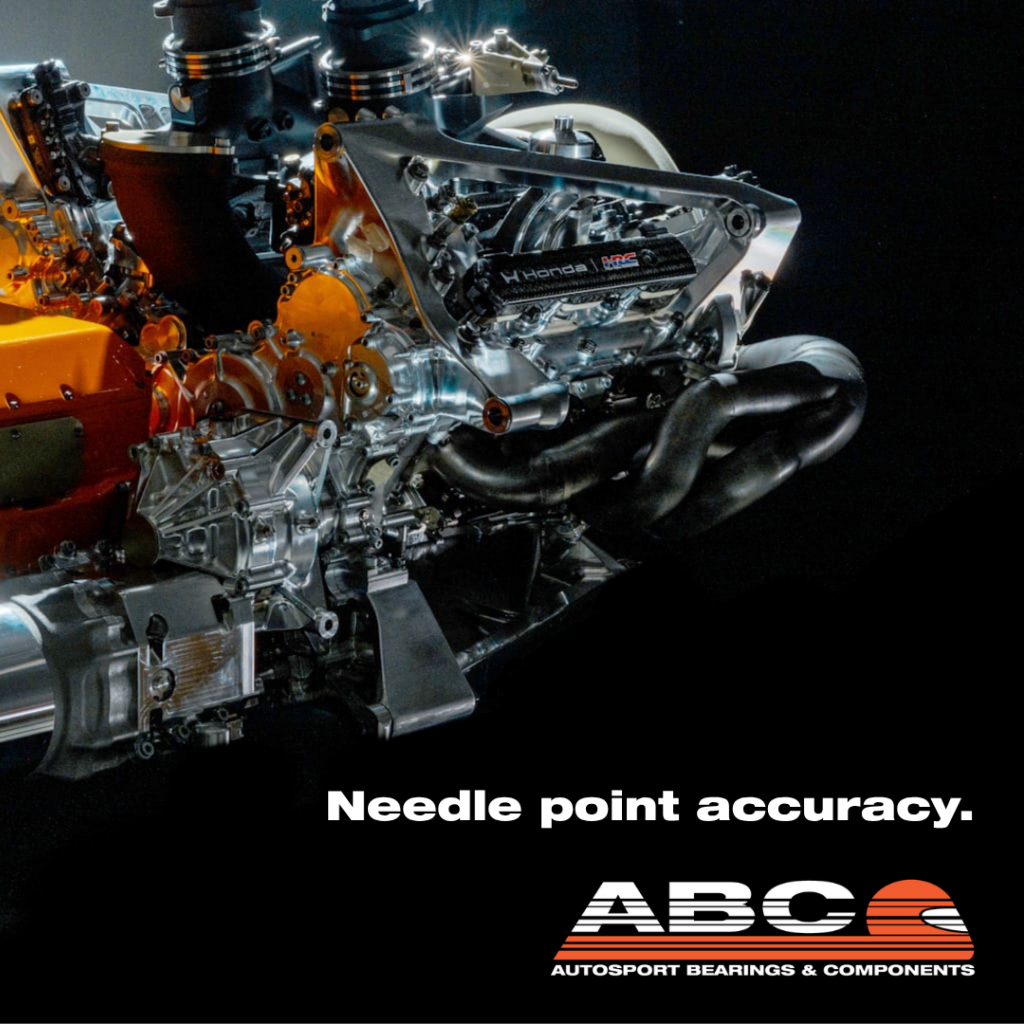
Race Performance Demands High Precision and Endurance.
A motorsport gearbox has very little room to waste. It must transmit high levels of torque while remaining compact, light and efficient. Its internal components also need enough stiffness to keep gears and shafts correctly aligned. Needle roller bearings used in motorsport gearboxes can help engineers meet these competing demands.
Their long, narrow rolling elements provide high radial load capacity within a relatively small outside diameter. This makes them useful beneath gears, around shafts and inside transmission assemblies where radial space is limited.
However, needle roller bearings are not simply smaller versions of conventional roller bearings.
Their performance depends heavily on raceway accuracy, alignment, internal clearance and lubrication. If any of those are wrong, the gearbox will usually make its objections known rather quickly.
In 30 Seconds
Needle roller bearings use long, small-diameter rollers to support radial loads.
Their low radial height allows them to fit into compact gearbox assemblies while providing high load capacity and rigidity.
Depending on the design, they may be used:
- Beneath rotating gears
- Around transmission shafts
- Inside idler gears
- In planetary gear assemblies
- Within selector and clutch mechanisms
- As axial thrust assemblies
Some needle roller bearings use the shaft or housing as their raceway. This saves more space and weight but requires very accurate, hardened and ground surfaces.
Needle roller bearings are mainly intended for radial loads. Axial loads often require a separate bearing or a combined bearing arrangement.
Key Takeaways
- Needle rollers provide high radial load capacity within a small space.
- Their compact design can help reduce gearbox size and weight.
- Caged needle bearings can support higher running speeds.
- Full-complement designs offer more rollers but have greater friction.
- Bearings without an inner ring use the shaft as the raceway.
- Raceway hardness, finish and geometry are critical.
- Standard radial needle bearings do not normally locate a shaft axially.
- Correct lubrication and internal clearance are essential.
- Needle roller bearings are only one part of a complete gearbox bearing system.
What Is a Needle Roller Bearing?
A needle roller bearing uses cylindrical rolling elements that are long in relation to their diameter.
Schaeffler defines needle rollers as cylindrical elements with a diameter of 6mm or less and a diameter-to-length ratio below 1:3. Their small diameter gives needle roller bearings a low radial section height.
Because the rollers make line contact with the raceway, they can support high radial loads and provide good rigidity within a restricted space.
This combination is the main reason needle roller bearings are widely used in gearboxes, transmissions and compact mechanical systems.
Why Are Gearboxes So Difficult to Package?
A gearbox contains multiple gears, shafts, bearings, selectors and lubrication channels.
All of these components must fit inside a casing that engineers want to make smaller and lighter.
At the same time, the gearbox must cope with:
- High input torque
- Rapid speed changes
- Gear-mesh forces
- Shock loads during shifts
- Vibration
- High shaft speeds
- Heat
- Limited lubrication space
- Debris created by wear
- Deflection of shafts and housings
Reducing the outside diameter of a conventional ball or roller bearing may also reduce its load capacity.
Needle roller bearings provide another option. Their narrow radial profile allows engineers to retain a useful number of rolling elements without requiring a large outside diameter.
This can create more room for a stronger shaft, a larger gear or a more compact casing.
How Do Needle Roller Bearings Carry So Much Load?
A ball bearing transfers load through small contact areas between the balls and raceways.
A needle roller creates a longer contact line.
This larger contact area helps distribute the radial load across the roller and raceway. A bearing can also contain several needle rollers within a limited circumference.
The result is high radial load capacity for the space occupied.
However, the load must still be shared evenly.
If the shaft bends, the housing is inaccurate or the bearing becomes misaligned, the load may concentrate towards one end of the rollers. This is known as edge loading.
Edge loading increases local stress and can shorten bearing life.
The bearing’s quoted load rating only tells part of the story. The stiffness and accuracy of the gearbox structure matter too.
Where Are Needle Roller Bearings Used Inside a Gearbox?
The exact arrangement varies between gearbox designs.
Possible applications include:
Beneath Free-Rotating Gears
A gear may rotate around a shaft until it is selected or locked into the transmission path.
A needle roller bearing between the gear and shaft can provide low-friction rotation without requiring a large radial space.
Idler Gears
Idler gears change the direction or path of torque through a gearbox.
Needle roller bearings can support the radial load while keeping the idler assembly compact.
Transmission Shafts
Machined needle roller bearings may support shafts where high radial capacity and rigidity are required.
However, another bearing arrangement may still be needed to control axial movement.
Planetary Gear Assemblies
Needle roller and cage assemblies can be used between planet gears and their supporting pins.
Their low section height leaves more room for the pin and gear structure.
Selector and Clutch Mechanisms
Smaller needle bearings and thrust needle assemblies may be used where components must move or rotate within a restricted area.
Not every motorsport gearbox will use needle roller bearings in all these positions. The exact design is normally specific to the transmission and its operating requirements.
What Types of Needle Roller Bearings Are Available?
Needle roller bearings are available in several different constructions.
| Bearing Type | Main Characteristics | Important Consideration |
|---|---|---|
|
Needle roller and cage assembly |
Very small radial section with individually guided rollers |
Requires hardened and ground shaft and housing raceways |
|
Machined bearing with an inner ring |
Complete bearing with a rigid outer ring and separate inner race |
Uses more radial space but does not rely on the shaft as a raceway |
|
Machined bearing without an inner ring |
Uses the shaft directly as the inner raceway |
Shaft finish is an Important Consideration, hardness and accuracy become critical |
|
Drawn-cup needle bearing |
Thin outer shell with a compact outside diameter |
Housing fit affects bearing shape and clearance |
|
Full-complement needle bearing |
Contains more rollers and no conventional cage |
Higher friction and generally lower speed capability |
|
Axial needle roller bearing |
Supports thrust loads within a low axial height |
Radial loads require separate support |
|
Combined needle bearing |
Combines radial needle rollers with an axial bearing element |
Useful when both load directions must be supported |
The correct choice depends on load, speed, available space and the surrounding gearbox design.
Why Would a Gearbox Bearing Have No Inner Ring?
Removing the inner ring reduces the radial space required by the bearing.
The shaft itself becomes the inner raceway. This can help engineers create a smaller and lighter assembly.
IKO’s machined needle roller bearing guidance explains that bearings without inner rings use the shaft as the raceway to create a compact footprint.
However, the shaft surface must then perform the job normally handled by a precision bearing ring.
It may require controlled:
- Hardness
- Surface finish
- Roundness
- Diameter
- Taper
- Heat treatment
- Running clearance
If the shaft cannot provide a suitable raceway, a bearing with an inner ring may be the safer option.
Removing the ring saves space. It does not remove the engineering requirements.
What Is the Difference Between Caged and Full-Complement Bearings?
A caged needle roller bearing uses a cage to separate and guide the rollers.
A full-complement bearing fills more of the available space with rollers.
Caged Needle Roller Bearings
The cage prevents the rollers from rubbing directly against each other. It also helps keep them aligned.
Potential benefits include:
- Lower friction
- Higher running speeds
- Reduced heat generation
- Better roller guidance
- Space within the cage for lubricant
Full-Complement Needle Roller Bearings
Removing the cage allows more rollers to fit inside the bearing.
This can increase load capacity within the same space.
However, the rollers may contact each other. This creates more friction and limits speed capability.
Schaeffler’s technical guide to cage-guided needle bearings explains that cage guidance can reduce roller skew, friction and operating temperature. It also notes that full-complement bearings are generally more limited at higher speeds.
The decision is therefore not simply about fitting in the largest possible number of rollers.
The engineer must balance load, speed, heat and service life.
Can Needle Roller Bearings Support Axial Loads?
Standard radial needle roller bearings are primarily designed to carry radial loads.
They normally allow some axial movement between the shaft and housing. Therefore, they cannot usually locate a gearbox shaft in both axial directions.
This matters because gearboxes can generate axial forces.
Helical gear teeth, for example, can create thrust along the shaft. Shaft expansion caused by heat must also be controlled.
Axial loads may be handled using:
- Angular contact ball bearings
- Tapered roller bearings
- Thrust ball bearings
- Axial needle roller bearings
- Combined needle roller bearings
- Thrust washers
The complete bearing arrangement must define which bearing locates the shaft and which bearings allow thermal movement.
Asking every bearing to locate the shaft can cause internal loads as the gearbox heats up.
Asking none of them to locate it tends to create a different, equally memorable problem.
Why Are Ball Bearings Still Used in Motorsport Gearboxes?
Needle roller bearings are useful, but they are not suitable for every gearbox position.
Ball bearings may offer:
- Better axial load capability
- Higher speed performance in some applications
- Lower friction
- Easier shaft location
- More tolerance of certain operating conditions
Tapered roller and cylindrical roller bearings may also be used where combined loads, rigidity or shaft location are important.
A gearbox may therefore contain several bearing types.
The aim is not to use needle roller bearings everywhere. It is to use them where their radial load capacity and compact size provide a genuine advantage.
How Does Lubrication Affect Needle Roller Bearings?
The contact between each needle roller and raceway requires an effective lubricant film.
Inside a gearbox, oil may reach the bearing through:
- Splash lubrication
- Oil jets
- Drilled galleries
- Grooves
- Passages through the shaft
- Oil mist
The lubricant must reach the loaded contact surfaces in sufficient quantity.
It must also carry heat away and help remove small wear particles.
Potential lubrication problems include:
- Insufficient oil flow
- Incorrect oil viscosity
- Oil aeration
- Excessive temperature
- Contamination
- Blocked oil passages
- Poor oil distribution
- Lubricant breakdown
A very low-viscosity oil may reduce churning losses. However, it must still provide enough film thickness at the actual load and temperature.
The best lubricant is not simply the thinnest oil that survives qualifying.
How Does Internal Clearance Affect Gearbox Performance?
Internal clearance allows for manufacturing tolerances, mounting fits and thermal expansion.
Once the bearing is installed, interference between the shaft, inner ring, outer ring and housing can reduce the available clearance.
Heat then changes the dimensions again.
If the operating clearance becomes too small, the bearing may generate:
- Higher friction
- Increased heat
- Roller distress
- Smearing
- Rapid wear
If the clearance is too large, the bearing may allow:
- Shaft movement
- Reduced gear alignment
- Noise
- Vibration
- Uneven roller loading
- Cage wear
For bearings that use the shaft as a raceway, shaft and housing tolerances directly influence the final clearance.
This is why clearance cannot be selected by looking at the bearing code alone.
Why Are Cleanliness and Filtration So Important?
Gearboxes naturally produce small particles through gear and bearing wear.
If these particles enter a needle roller contact, they can indent the raceway or disrupt the lubricant film.
Repeated rolling over damaged areas may then lead to surface fatigue.
Water, sealant, machining debris and fibres can also contaminate the oil.
Good gearbox practice may include:
- Careful cleaning during assembly
- Filtered lubricant
- Clean filling equipment
- Magnetic debris monitoring
- Regular oil inspection
- Correct sealing
- Clean storage of bearings and components
A high-quality bearing installed into a casing containing old debris has been given a needlessly difficult first day.
What Causes Needle Roller Bearings to Fail?
Possible causes include:
Misalignment
Shaft or housing misalignment can concentrate load at the roller ends.
Inadequate Raceway Hardness
A shaft used directly as a raceway must be hard enough to resist indentation and wear.
Poor Surface Finish
Rough or damaged surfaces can disrupt the lubricant film.
Incorrect Clearance
Excessive or insufficient clearance can affect alignment, heat and load distribution.
Insufficient Lubrication
A weak lubricant film may lead to smearing, scoring and rapid surface damage.
Contamination
Hard particles can indent the raceways and rolling elements.
Excessive Speed
A bearing design intended for heavy, slower loads may generate too much friction at racing speeds.
Shock Loading
Aggressive shifts, wheel hop or driveline impacts can create short but severe loads.
Installation Damage
Needle rollers, cages and thin outer rings can be damaged by incorrect tools or uneven fitting forces.
What Are the Signs of Needle Roller Bearing Damage?
When a gearbox is inspected, possible warning signs include:
- Pitting or flaking
- Scoring
- Discoloured rollers
- Cage wear
- Cracked cages
- Roller skew
- Uneven wear patterns
- Indentations
- Metallic debris in the oil
- Increased shaft movement
- Changes in noise
- Rising gearbox temperature
The pattern of damage can help identify the cause.
Replacing the bearing without understanding that cause may lead to the same failure happening again.
How Do Needle Roller Bearings Help Reduce Gearbox Weight?
Their compact radial dimensions can help engineers:
- Use smaller housings
- Increase shaft diameter without enlarging the gearbox
- Reduce the size of surrounding components
- Position gears more closely
- Remove a separate inner ring
- Improve load capacity within the available space
However, the lightest bearing is not automatically the lightest system.
Using the shaft as a raceway may require additional heat treatment or machining. A smaller bearing may also need a stiffer surrounding structure.
As discussed in How Does Reducing Race Car Weight Change Bearing Requirements? the complete assembly must be considered.
How Do You Choose a Needle Roller Bearing for a Gearbox?
Important questions include:
- What radial load must the bearing support?
- Are shock loads expected?
- What is the maximum operating speed?
- How much radial space is available?
- Does the bearing need an inner ring?
- Can the shaft provide a suitable raceway?
- Is axial location required?
- What operating clearance is needed?
- How will the bearing be lubricated?
- What temperature will it reach?
- How accurate are the shaft and housing?
- What inspection or replacement interval is planned?
Dimensions are only the starting point.
Two bearings with the same bore, outside diameter and width may have different internal designs and operating capabilities.
How Can ABC Help?
ABC supplies an extensive range of machined needle roller bearings for gearboxes, transmissions and demanding engineering applications.
Available options include different:
- Bore sizes
- Outside diameters
- Widths
- Inner-ring arrangements
- Seal configurations
- Internal clearances
- Cage designs
- Manufacturer brands
The range includes products from IKO, INA, SKF, NTN, RBC and other established bearing manufacturers.
For specialist applications, the bearing should be selected using the actual load, speed, raceway and lubrication requirements.
CONTACT US: Talk to ABC about needle roller bearings for your gearbox or transmission application.
What Should You Read Next?
Selecting the right bearing type is only part of the job.
Clearance and lubrication determine how that bearing behaves once speed and temperature begin to rise.
Next in the series:
How Do Bearing Clearance and Lubrication Affect High-Speed Performance?
You can also return to the Formula 1 Fan Hub for circuit guides, technical articles and more from the 2026 season.